What happens when you bring a group of senior procurement leaders into a room, remove the presentations, leave the company logos at the door and create space for honest conversation?
The conversation changes.
People stop talking about what should happen and start talking about what is happening. What is working. What isn’t. Where they are stuck. Where they see opportunity. What they need from one another. And what procurement needs next if we’re serious about making sustainable procurement the default while creating business value.
And – perhaps most importantly – you get a glimpse of what becomes possible when procurement stops trying to solve today’s challenges alone.
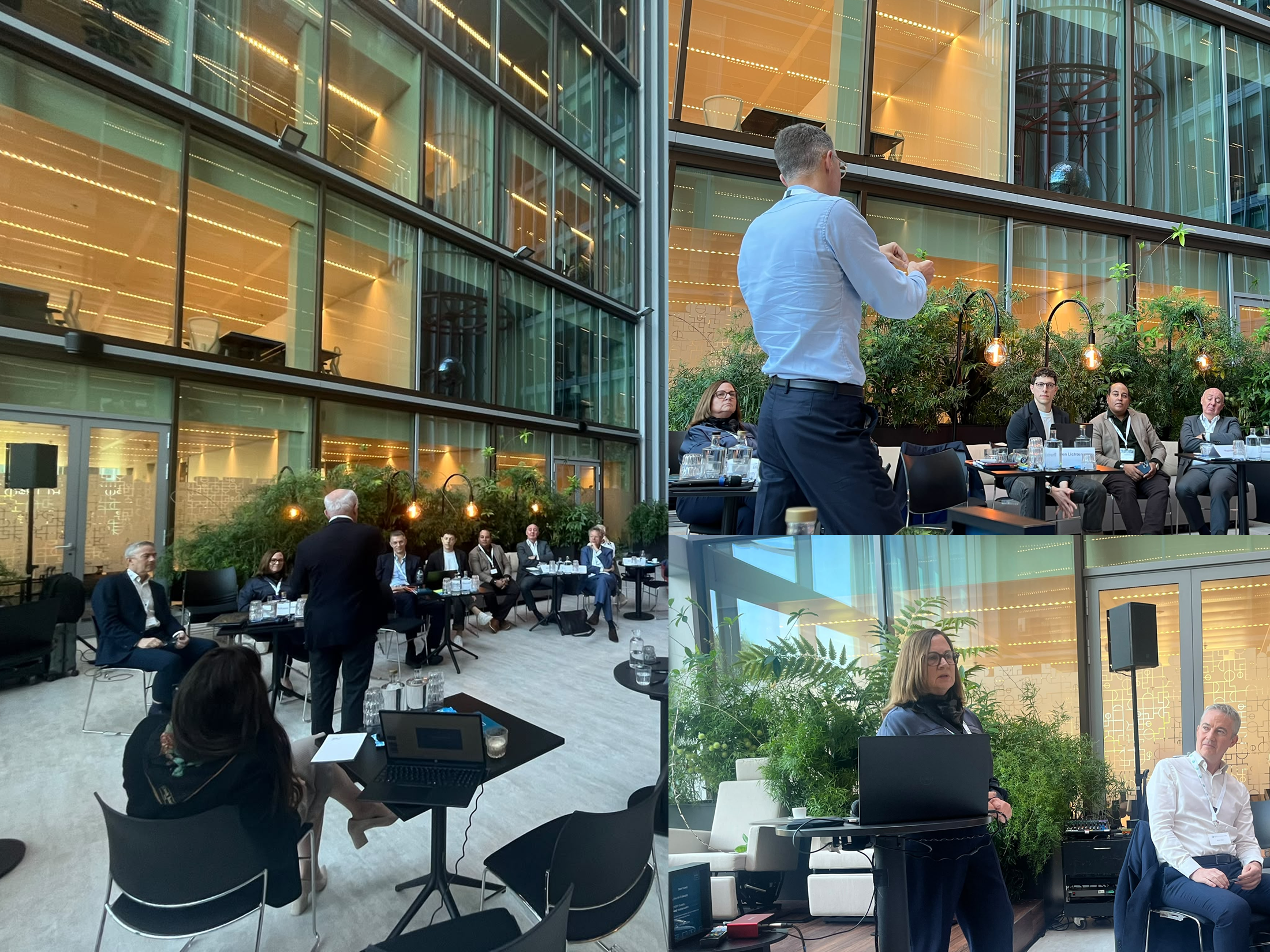
On 29 September, we experimented with exactly that. At the World Trade Center in Amsterdam, we brought together a small group of procurement leaders and C-suite peers for the first SPP Leadership Huddle.
Why a Huddle? Because procurement is in the middle of the game, the pace is continuously increasing, and the number of competing priorities isn’t getting any smaller. A huddle is what teams do in those moments: pause, regroup, check what’s really happening on the field and decide where to focus next.
That’s what this was. Achance for procurement leaders to challenge one another, compare realities of implementing sustainability solutions, pressure-test assumptions and help identify the sustainability areas where procurement should be putting its energy over the next 12-24 months.
From “why” to “how”
We came into the Huddle with the understanding that we are no longer debating whether sustainability matters. We’ve won that argument.
The real question now is how we embed sustainability into the way organisations actually operate. How it shapes decisions, creates value, manages risk and strengthens resilience. How we support our teams, bring business leaders with us and make sustainability part of the business rather than something that sits beside it.
That requires a business-minded approach . It’s not always the most popular approach, but existential for this work to survive leadership changes, market pressures and shifting priorities. Sustainability has to be woven into the way business is done. Not treated as an add-on to it. When sustainability becomes part of how a business succeeds, it stops being sidelined.
Our reflections
The conversation in the room felt practical and honest. And it felt like a glimpse of SPP 2.0 in action. There was no expectation that everyone would care equally about every topic or volunteer for every piece of work. Quite the opposite.
It’s not ambition we are lacking but focus. The room recognised that we cannot do it all. The magic happens when people identify where they can make the biggest difference and put their hand up.
That’s exactly what happened. Some people stepped forward to lead. Some wanted to contribute. Some listened and said, “that’s not my focus right now.”
All of those responses were valid. Because focus is not about getting everyone to work on everything. It’s about helping the right people come together around the right challenges and creating the conditions for impact.
That’s the village at work. That’s the huddle at work. And that’s the future of SPP. That’s focus for impact.
So what did we learn?
One of the first questions we asked was whether sustainable procurement remains a business imperative in today’s environment.
With organisations facing geopolitical uncertainty, cost pressures, digital transformation, competing priorities and increasing expectations from stakeholders, it felt like the right question to ask. The answer from the room was immediate and unanimous: Absolutely.
But the conversation quickly moved beyond why. The real discussion was about value.
Sustainability is no longer viewed as a separate corporate ambition or a compliance exercise. The leaders in the room spoke about it as a driver of resilience, innovation, market access, reputation and long-term business performance.
In other words, sustainability has become a business conversation. And procurement sits right at the centre of it.
Four themes. Four must-wins.
Four themes kept coming back in the room. And they have become our must-wins: the focus areas for the years ahead. They are not new, but they are the areas on which we can best place our focus to drive progress and create the greatest possible impact.
- Resilience and future-ready supply chains.
Whether discussing geopolitical uncertainty, supplier capability, regulation or resource constraints, resilience surfaced again and again.
Resilience starts with the ecosystem. No company can build resilient supply chains alone. Supplier readiness, infrastructure, energy systems, capabilities and access to resources all sit beyond the walls of a single organisation.
Supporting suppliers isn’t charity. It’s good business. And increasingly it’s a requirement for building future-ready value chains.
The organisations that thrive will be those investing early in the relationships and capabilities that help them adapt when conditions change. And conditions will change. Many times. This will be the difference between riding the wave or being pulled out to sea by it.
- Practical AI and digital enablement.
AI emerged as one of the most energising topics in the room. Not because people were interested in technology for technology’s sake, but because of what it could unlock for sustainable procurement. Better visibility into supply chains. Better data. Better decisions. Less time spent on administrative work and more time focused on creating value.
But nobody believed technology would solve our challenges on its own. Culture, adoption, capability building and leadership came up again and again.
Within SPP, this feels like a natural area for collective action. Many organisations are asking similar questions, experimenting with similar tools and facing similar challenges. Learning together may prove far more valuable than learning alone.
The technology matters. The people using it matter even more.
- Collaboration and leadership.
The challenges ahead don’t sit neatly within procurement, sustainability or operations. Success increasingly depends on bringing people and expertise together around shared outcomes. Linking, and bridging the business functions.
Procurement is evolving from managing suppliers to connecting people, aligning stakeholders and helping drive change. In other words, stepping into an even more strategically driven role.
Leadership is becoming the differentiator. The future will belong to procurement teams that are curious, collaborative and comfortable navigating complexity. Technical expertise remains important. But mindset, influence and the ability to bring others along on the journey may matter even more.
- Making the business case.
The room was clear on this point. If sustainable procurement is going to scale, we need to become better at speaking the language of business which means connecting sustainability to growth, resilience, innovation, risk management and long-term value creation. Sustainability agendas move faster when priorities are linked to business outcomes.
The scaries.
Cost pressures, competing priorities, limited resources, culture and data quality were all raised openly as real challenges that need to be acknowledged and addressed. It was remarkable how often culture found its way back into the conversation.
The fun bits.
Market access. Innovation. Circularity. Stronger supplier relationships. Competitive advantage. The conversation made it equally clear that sustainability is not simply about managing risk or meeting expectations. It creates value.
A happy bubble? Maybe. But worth listening to.
Now, we appreciate that we may have been sitting in a bit of a happy bubble. But it is also worth noting that this bubble was filled with highly accomplished leaders from some of the world’s most recognised organisations. People with significant business responsibilities, operating in complex and demanding environments.
And one of the things that brings them together is a shared conviction: sustainability, when approached commercially and strategically, is not a constraint on business performance. It is increasingly one of the drivers of it. That’s a perspective worth paying attention to
The biggest takeaway
It stood out to us that nobody was waiting for perfect conditions before acting. No one was looking for 100% certainty. Focus was on progress. Taking the next rights step which leads to perhaps the biggest takeaway from the, whic was also the simplest.
No organisation can solve these challenges alone. We all know that we shout this from the mountaintops at SPP. Some things need to change as we look at SPP 2.0 but a lot needs to stay exactly as it is. Focusing on the power of people and the strength of collaboration is high on that list.
The conversations we had and insights from Amsterdam, some of which we have tried to capture and share here with you, are already helping shape SPP’s priorities as we get ready for 2027
Over to you
How does all of this resonate with you, are there glaring gaps? Has this highlighted something new you had not yet thought of or reinforced something that is already widely recognized? As you look to next year only a few weeks away now, what do you believe procurement needs to focus on most? Reach out to us at ambassador@spp.earth and let us know!
Come and join us in the room
The conversation was held with a small group, but it shouldn’t stay there. If you’re a senior leader who believes procurement has a critical role to play in shaping resilient, responsible and future-ready organisations, we’d love to have you in the room.
The SPP Leadership Huddle is one of the touchpoints within our Champions Programme and an important way for us to bring senior leaders together around the challenges and opportunities shaping procurement. Creating space for honest conversations, shared learning and collective reflection remains an important part of our mission.
Find out more about the Champions Programme here or connect with Mélissa at melissa@spp.earth
And if the Huddle taught us anything, it’s that the village is ready to get to work!