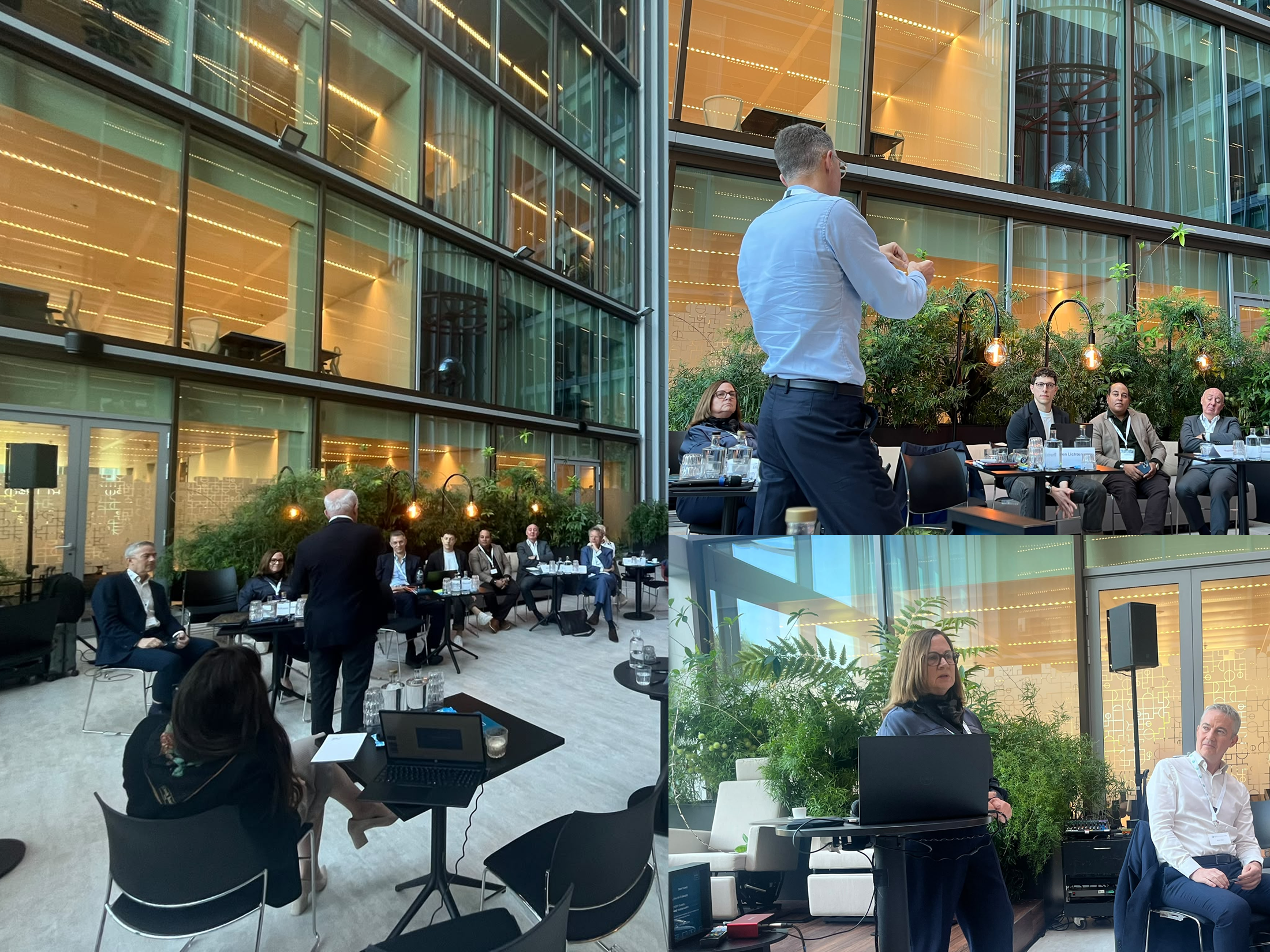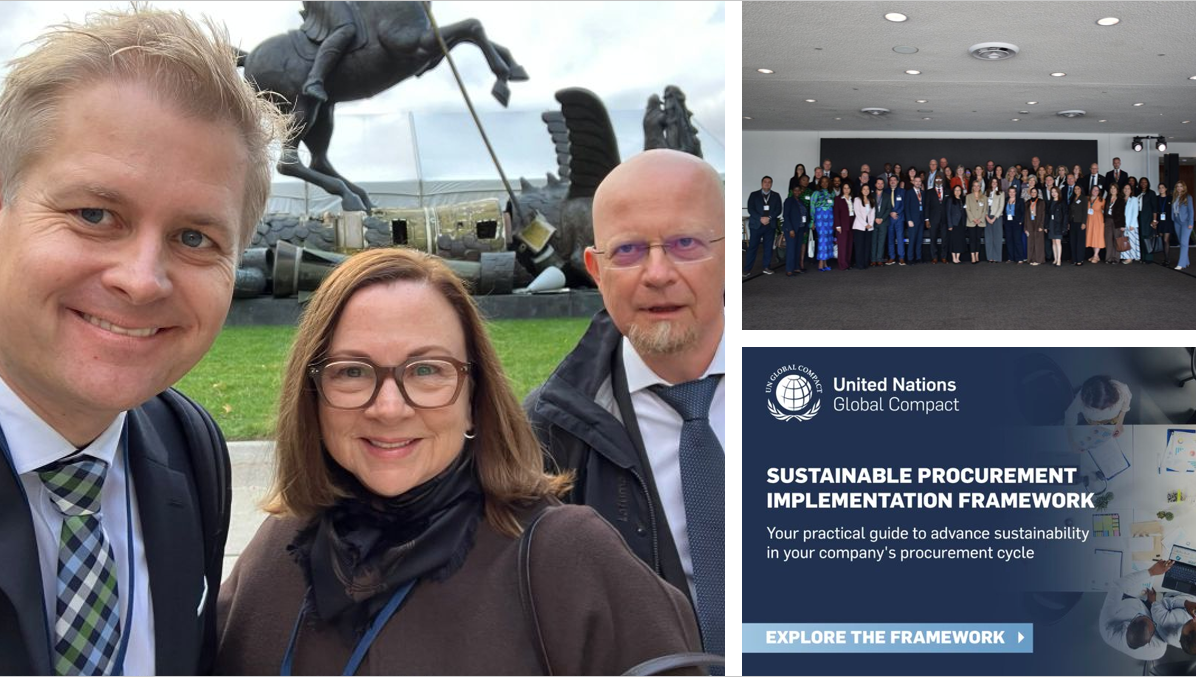
On 27 October, the SPP Pharma & Life Sciences Chapter brought the community together to celebrate real-world supplier sustainability results, and what an event it was.
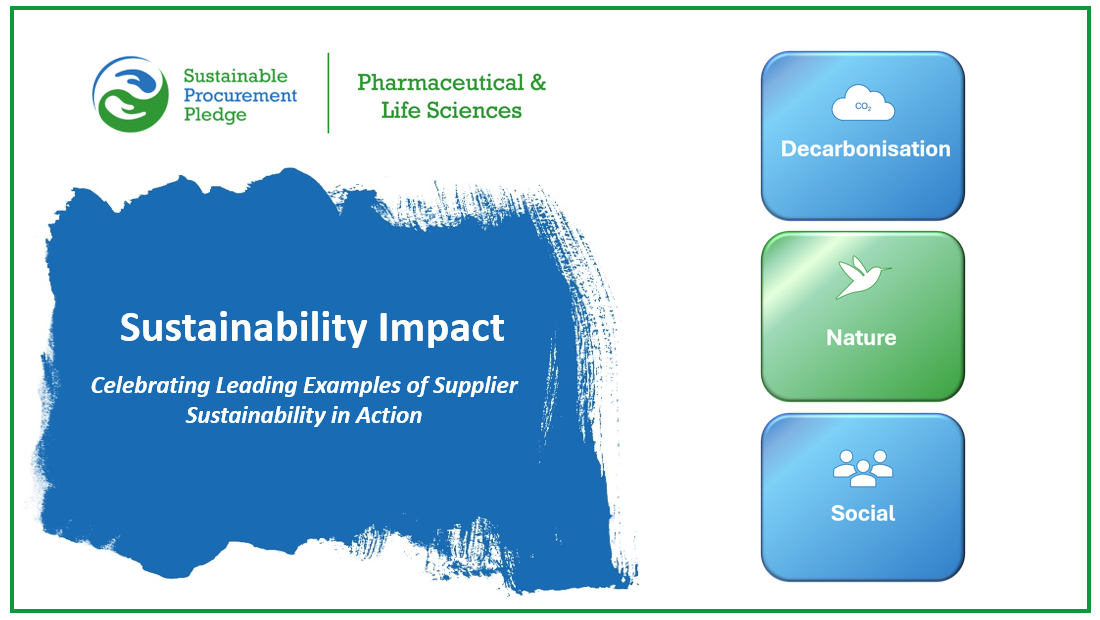
When the Chapter launched Sustainability Impact: Recognizing Real-World Results, it asked a simple question: what does sustainability impact actually look like in practice? The answer came from more than 100 organisations and more than 115 case studies across three categories: decarbonisation, nature and social impact.
Six case studies were selected, one for large organisations and one for SMEs in each category, and presented live to the community. Huge congratulations to all six! Your stories are truly inspiring. They show what real progress looks like, and the honesty about what worked, what didn’t and what you learned along the way will help others take their own next step. Thank you for sharing them, and well done!
Meet the six
Decarbonisation
Large organisations: Cohance Lifesciences – “Delivering Climate Impact Across the Value Chain”
- Challenge and solution: Cohance, a global pharmaceutical CDMO, wanted to cut Scope 1, 2 and 3 emissions without compromising quality, compliance or cost. It turned procurement into a decarbonisation lever, combining sustainable sourcing, supplier ESG engagement, localisation, renewable energy and circularity.
- Result: around 38,000 tCO₂e less in annual Scope 1 and 2 emissions, about 6% lower Scope 3 emissions, local sourcing up from 80% to 86%, and 62% of suppliers now assessed on ESG criteria.
- Challenge and solution: with Singapore pushing for full water recycling, this chemical and waste treatment company needed a less energy-intensive alternative to traditional evaporation. It developed a modular membrane distillation system with local government agencies and tertiary education partners.
- Result: about 80% lower carbon footprint (around 247 tonnes of CO₂ a year), with up to 80–95% of water recovered for reuse.
Nature
Large organisations: Procos – “Industrial Packaging: From Waste to Value”
- Challenge and solution: Procos, an Italian pharmaceutical manufacturer, was treating more than 200 tonnes of contaminated industrial packaging a year as waste. It qualified a specialist partner to decontaminate the drums and return them to the market for other industrial uses, with limited capital investment and a shift in mindset.
- Result: in 2025, 144 tonnes of metal and plastic drums were recovered and only 68 tonnes were incinerated, diverting 67% from disposal. As Fabrizio Sacchi put it, “Sometimes the most valuable resource is the one we are about to throw away.”
SMEs: Blue Ocean Robotics – “UV-C Robot Reduces Water and Chemicals”
- Challenge and solution: aseptic manufacturers need to reduce chemicals, water and human presence in cleanrooms without compromising contamination control. Blue Ocean Robotics’ autonomous UV-C robot was validated and integrated into routine operations at a pharmaceutical site.
- Result: around 700 litres of chemicals and 5,000 litres of water for injection saved per year in an 87 m² Grade B room, and an 87% reduction in disinfection-related human presence.
Social Impact
Large organisations: DKSH – “DKSH advances Human Rights Due Diligence Across Asia Pacific”
- Challenge and solution: growing client and regulatory expectations, particularly in Europe, called for a consistent, scalable approach to human rights due diligence across an extensive value chain. DKSH built awareness and capability across its teams, mapped risks through supplier screening, its own due diligence and on-site interviews, and used third-party audits to evaluate success.
- Result: audited across five markets between 2023 and 2026, two with zero findings and only five findings across the rest, all closed.
SMEs: HackHealth Consulting & Communications – “Procuring Wellbeing for Workforce Resilience”
- Challenge and solution: after losing a burnt-out colleague, this Shanghai-based healthcare communications consultancy found that 67% of its people felt work-related stress. It treated wellbeing as a procurement decision and introduced a free, professional employee assistance programme for staff and their families.
- Result: 87% of participants reported an improved mental state, and male participation rose from 18% to 41%.
A big thank you
To every organisation that took the time to share a case study: thank you. The quality of the submissions was so high that selecting a few was genuinely hard.
Thank you also to our judges, who volunteered their time and brought perspectives from across SPP: Cam Thao Nguyen Thi, Fleur Heineke, Michael Masinde, Nisha Kulangara and Sandra Gaspar, together with the Chapter team.
And a huge congratulations to the SPP Pharma & Life Sciences Chapter, led by co-chairs Maria Terracina and Robert Williams, with the support of Elissa Tokusato, Efthymios Kyratzopoulos and Rachel Eyre. Building on the 2024 Beyond the Guide Deepdive, they took the initiative further, from supplier engagement to real impact, widening the scope beyond decarbonisation to include nature and social impact.
And there’s more to come
Six case studies on stage, but many more great examples were submitted. We’re reviewing them and exploring ways to share them back with the wider SPP community, so that we can all learn, get inspired and replicate what works. More to come on that, so stay tuned!